
If you ever wanted to witness a sitcom of your favorite characters committing silly shenanigans, oh do I have the game for you.
Tomodachi Life: Living the Dream (LtD) released after a five year long drought to many eager Mii fans around the world. After playing the demo, I was practically frothing at the mouth waiting for the physical copy of the game on my porch step. No longer did we have to wait to see our favorite characters fight or marry one another.
Generally speaking, Tomodachi Life is a pretty standard life simulation game. If you’ve ever played anything like the Sims, the structure of the game is similar. Except with a whole lot less dramatic death.
You, as the player, are the landlord of the island you put your characters onto. Miis are the characters you create, interact with and witness the situations of. Miis, by their nature of representing the people playing, are incredibly customizable. As long as the characters are generally humanoid, they can be created.
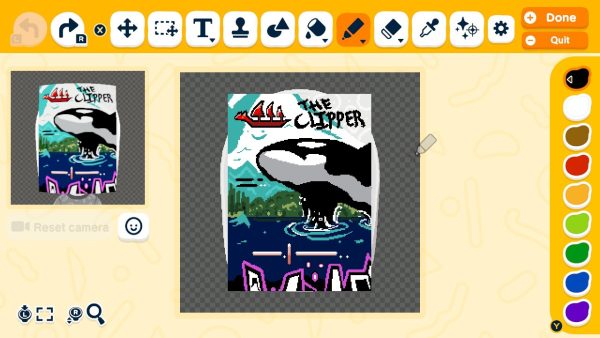
Over the years, Miis have slowly become more packed with options to pick. For many people of color (POC) players, Living the Dream stepped up and gave them more options for hairstyles, skin tones and facial features. Not only that, but the LtD character creator allows you to draw on face paint, which was a huge plus for those who wanted to recreate characters more accurately.
Something I will note about the face paint is that if you choose to draw on eyes or a mouth, they won’t change with expressions. This can look pretty freaky if a certain situation really needs it.
Another huge win for representation is the long requested addition of gender and sexuality options. In LtD, you have the option of selecting a Mii’s gender identity, sexual identity, pronouns and gender expression. As someone who is both a POC and identifies as LGBTQ+, it made me feel incredibly seen and giddy to be able to represent myself and my partner more accurately.
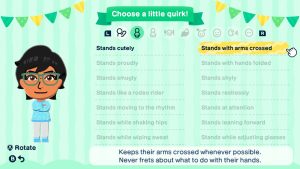
Beyond appearance there are 16 personalities in the game, each affecting how a Mii carries themself. Personality for a Mii is determined by a scale of one to eight in five different categories: movement speed, speech tone, energy levels, demeanor and quirkiness. One completely unique and very fun feature added to LtD was quirks.
If a person has a little habit that they do like walking slouched or eating things in one huge bite, quirks are the way to see that habit come to life. Some quirks are unlocked early on, whereas others are unlocked at higher levels of your island at the wishing fountain.
Personality and quirks affect every part of the game, from their style to how they talk or interact with other islanders. It surprised me just how in depth their personalities went and I haven’t even seen every quirk yet, even after a week of playing the game.
One huge difference between the original and the remake is the fact that you cannot share QR codes of Miis. That means you’d have to make all your characters yourself. It sounds fun at first but after hours of sitting in the Mii maker, I hear the soundtrack in my nightmares.
If you’re slow to add Miis or you’re making multiple islands across different profiles, the game will keep pestering you to make Miis or make them do certain things to progress — pretty agonizing if you get tired of the Mii maker.
Customization is not only limited to the characters, but to the entire island and the objects within it. The base objects and buildings are all wonderfully crafted and fun to look at, meshing very well with the whimsy of the Miis. If you want to make your Miis live on a themed island, the world is your oyster. However, like quirks, a lot of the things are unlocked at higher levels of your island. In other words, you better get to grinding.
Within the gameplay, you are expected to help Miis out with certain issues. Solving these issues are how characters and the island level up and unlock more parts of the game. These prompts are categorized into personal, relationships like friendship or love, situational and minigame. These prompts are distinguished by icons and colors.
It took me a little longer to figure out what each problem was tied to in comparison to the original Tomodachi Life since some of the icons were now consolidated down into mostly color as a distinguishing feature. It’s not too bad once you get used to it, but I really do miss getting excited to see a love bubble like with the original icons.
Exclusive to LtD, you can choose to make them interact with things manually if you want to meddle with your Mii’s lives. Miis can be smushed together if you want to see a certain someone get together with another or perhaps you just want to see them fight. However, things might not go as you plan.
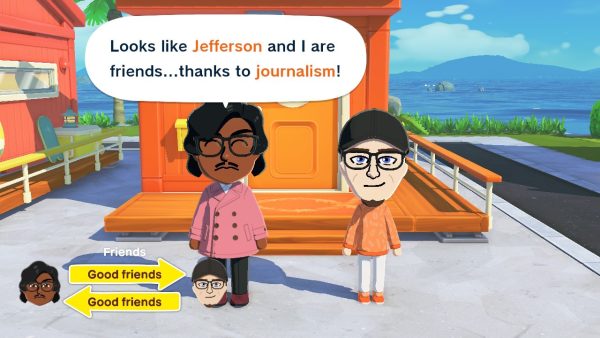
Unexpected is a huge understatement when it comes to what these Miis can do. When a Mii interacts with a fellow islander, their interactions can vary wildly depending on where they are, what their personality is and other factors, such as appearance or relationships to other Miis. For a majority of the time, they interact with objects or each other on their own both while you’re in the game and outside of it.
Sometimes a Mii may prompt you to type in a response for them such as for nicknames or conversation topics, but there is the option to click on premade responses. If you’re thinking of writing something a little scandalous as a response, then you’re in luck. As far as I know, there’s absolutely no filter on what the Miis can say in LtD — so go ham.
If while you’re playing you think: “Wait, I don’t remember writing that response,” it’s because they came up with something on their own. Honestly, I didn’t even know Miis had the concept of doomscrolling yet here we are.
Whenever you get bored of watching their interactions, you can occasionally get the prompt of playing a minigame with them. My personal favorites are No Repeats and bowling, as those require the most brain power to me. There’s some minigames tied to situations, most notoriously being the marriage minigame. If you were stressed out playing the original Tomodachi Life marriage minigame, good luck.
One thing that is a bit jarring is that in some minigames or dream sequences the framerate drops really bad. I am playing on the older Switch Lite, however I saw the framerate drop on other people’s playthroughs.
In regard to the original game, some things found on the old island, such as the concert hall and ranking board, are noticeably absent which is a tad disappointing. It’s a shame that we can’t hear the Miis sing very badly in autotune unless the developers update the game.
Another gripe to note is that many events are repeated, particularly with starting friendships or asking the player their personal opinions. If I choose not to answer certain personal prompts, they’ll keep repeating it until I do, which gets annoying.
Despite the repeats, there are some events I’ve never seen before that I keep discovering. I have yet to have to break up a fight or witness divorce as of writing, but I am excited to see the Miis crash out eventually.
LtD is a long-term game in the end and it could take many months before I see everything in my playthroughs due to the sheer amount of depth.
For about seven years, Miis have been a consistent part of my life. I played the original Tomodachi Life and both Miitopia versions during the pandemic and fell in love with this niche ever since. I binged Wii party videos, Miitopia deep dives and Tomodachi Life playthroughs and couldn’t get these silly little guys out of my head.
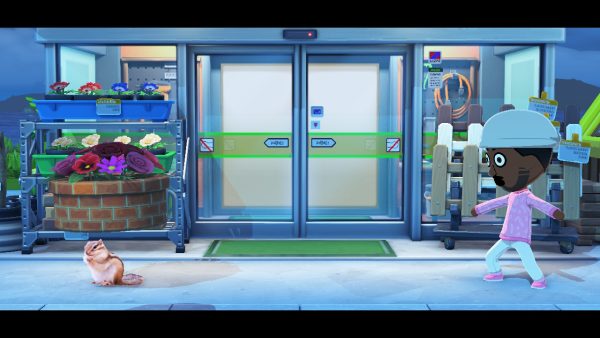
It’s not the most serious of game niches nor one that has the best gameplay. However, it was with me and others during times that felt the most tumultuous including now. Sometimes it’s easy to forget that there is a lot of fun and joy to be had when things feel so tough.
Living the Dream and other Mii games like it are meant to remind us to get creative and silly every once in a while. I mean, I made an entire Clipper island for the screenshots alone and I still check on it every now and then to update the staff on their Miis.