A new addition to EvCC’s cultural student unions held its first club event on April 28, intending to leave a lasting impression on campus. The Indian Student Union (ISU) fundraiser was in preparation for a larger cultural celebration in May.
The ISU was officially created just before spring break. Jasmine Bajaj, the club’s president, said that Indian culture felt underrepresented on campus.
“We’re here to build community for Indian students, because we have an Asian Student Union, Latino, and Black Student Union but we don’t have an Indian Student Union yet,” she said.
Bajaj said the first event planned by the ISU members was originally a larger event to celebrate Holi, a festival of colors, but after only getting approved for some of their desired budget, they realized fundraising would be necessary. The Henna Fundraiser was the club’s solution.
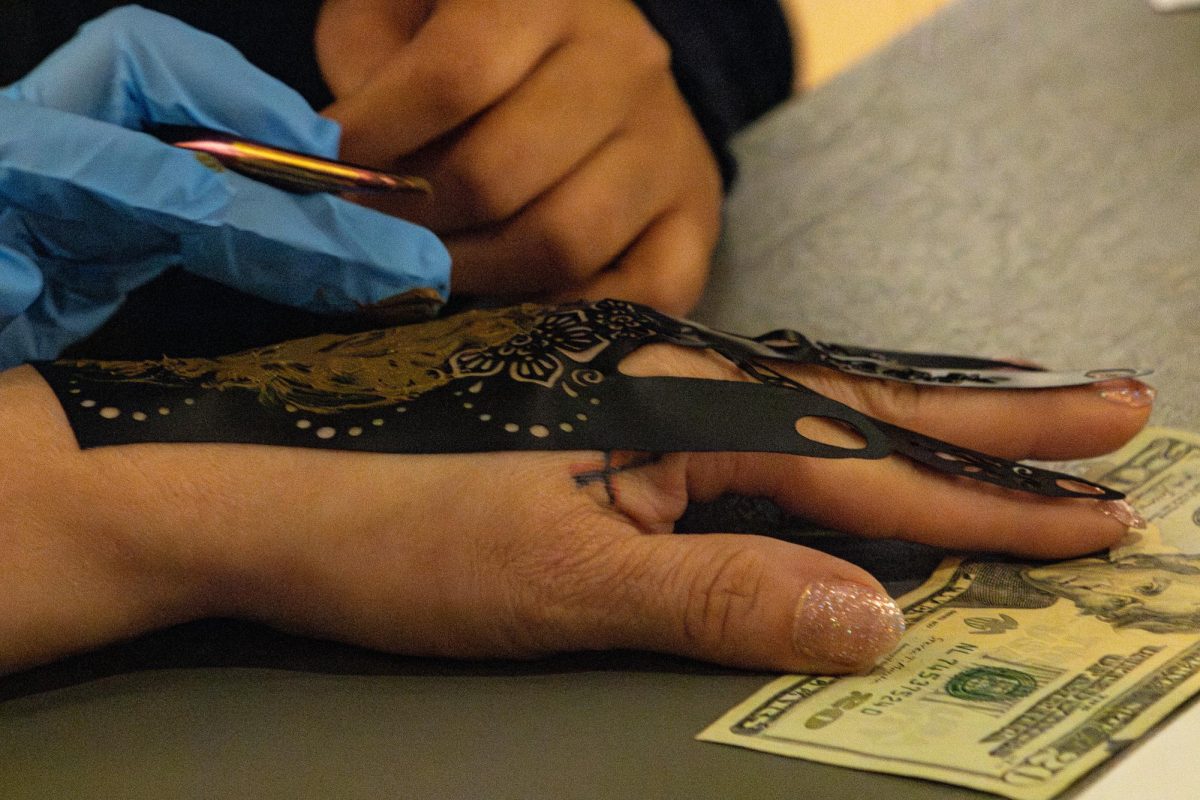
The Henna Fundraiser occurred in the Trojan Annex inside PSU from 12-3 p.m. The room was arranged with two long tables in the center, each rowed with chairs and set with dozens of unique henna stencils. A separate station off to the side offered free popcorn and cookies.
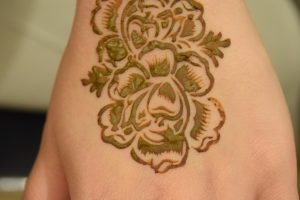
Henna, also called mehndi, is a dark ink used to create intricate designs on the hand. The ink is made from the crushed leaves of a plant by the same name. The hand art is typically worn for wedding celebrations, a practice that originates from the Middle East. The henna ink comes in small plastic piping bags, easy for applying to the skin.

“It’s considered auspicious when a bride wears mehndi on her hands, it’s like a symbol of happiness and a symbol of just prosperity. It gives coolness to the hand,” Kayinat Rataul, the vice president of ISU, said.
The ISU’s goal is to introduce people to Indian culture and to celebrate its food, traditions, and media with a diverse community of students.
“It’s not just for Indian students, obviously. We have a whole mix in our club,” Bajaj said. She stated that the ISU currently has between 25-30 members.
Several people who attended the Henna Fundraiser found out about it incidentally through a promotional sign placed outside of PSU, or from the chalkboard sign outside of the annex. Volunteers for ISU were also passing out flyers inside the building’s cafeteria.
Many students are familiar with henna by seeing it previously at farmer’s markets and street fairs. Ashley Heckathorn, a nursing student, said she once found henna being done in a mall kiosk.
“I really enjoy henna, and I think the designs are beautiful, (but) it’s hard to find people that do it. … Every time I see it, I’m like ‘Oh my gosh, I have to get it done!’” Heckathorn said.
Each hand of henna cost five dollars, and all proceeds went back into the club to fund its Holi event.
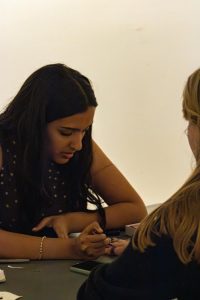
The artists for the event were members of the club including Bajaj and Rataul. Another member, Nickaira Dequilla, was the third main artist. When the event was planned, every artist was supposed to use stencils, but issues arose with certain designs not transferring properly or the ink showing up too light. Bajaj ended up doing henna by hand as a result.
Bajaj practiced henna for several months before this. She said she became interested in learning because “My mom would always have to pay to get hers done like … $50-100 a hand — so why not just do it at home?”
Bajaj said the most difficult part of learning henna was figuring out “the control, the grip of it. I couldn’t get details.”
Although Bajaj had experience doing henna, she never did henna on anyone else. This presented a new challenge. “When I’m working on myself, I can twist and move my hand however I want. You can’t really twist other people,” she said.
The fundraiser was Dequilla and Rataul’s first attempt at doing henna, which they first practiced on each others’ arms and hands. They tried both stencils and freehand. Rataul said that henna is “harder than it looks.”
After getting more comfortable, Dequilla and Rataul also began to take customers. They used stencils to provide an outline which they then went over by hand to refine details and make it darker, effectively resolving the earlier stencil issues.
The henna ink goes onto the hand thick and dark and rubs off dry. Water is only used as necessary. The longer the ink is left on the hand, the longer the design will stay. Bajaj said that if it’s left on for at least 30 minutes, the design will last several days. “If you put it on for an hour, it will last a couple weeks,” she said.
Lorie Egger, a student getting their henna done, said “as cold as it is, it’s super satisfying.” They said that the sensation of the ink reminded them of when they were a kid. “When I was younger, I used to draw on myself to relax and this feels like that,” Egger said.
By 2:10 p.m., the Trojan Annex had over 20 students socializing, eating and picking out stencils. The artists were consistently working through the whole event, with each henna session taking between 10-30 minutes. The times varied based on whether someone was getting one hand or two. The size of the designs and use of stencils were also important factors.
When asked whether this could be a recurring event, the ISU president said that it could be depending on the overall success.
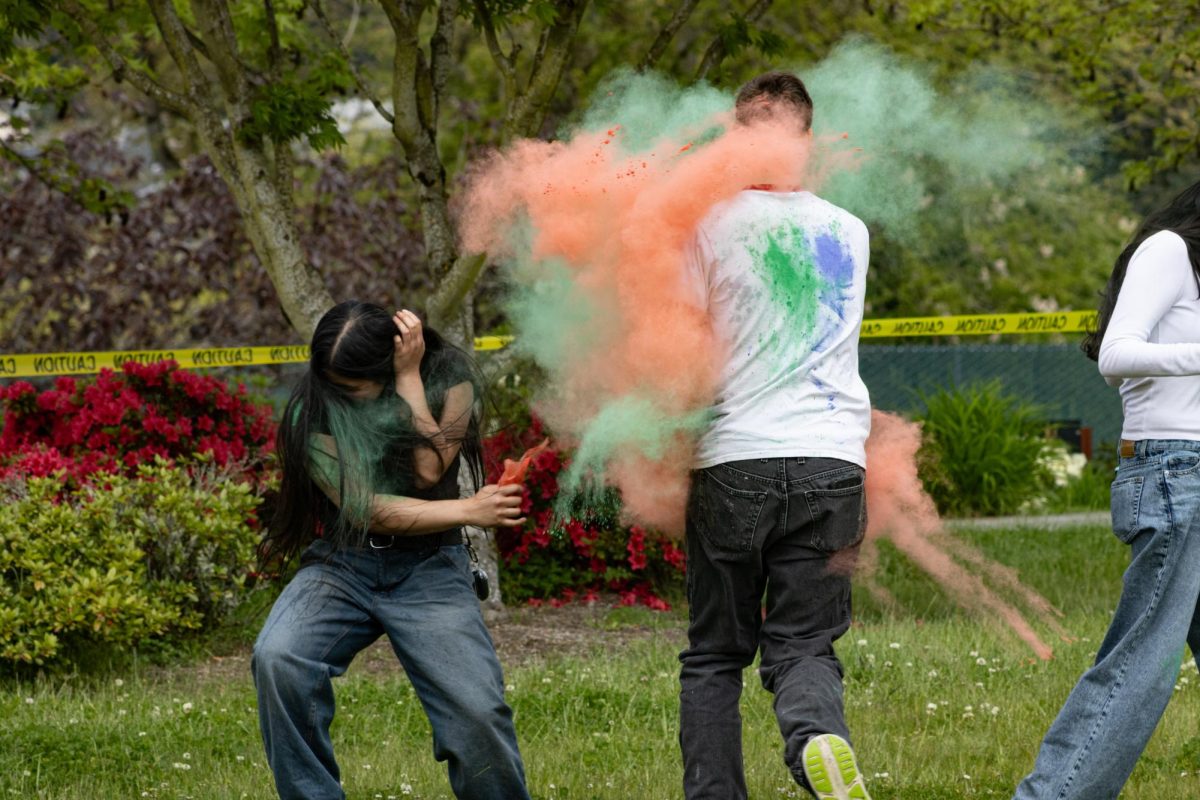
“The main reason we started the new student union was to show people what our Holi celebration is. That’s like a welcoming spring kind of festival. We’re going to do a big event with colors, water balloons and a bunch of Indian food, of course,” Bajaj said.
The Holi celebration occurred May 7 on the Index Lawn from 2-5 p.m.