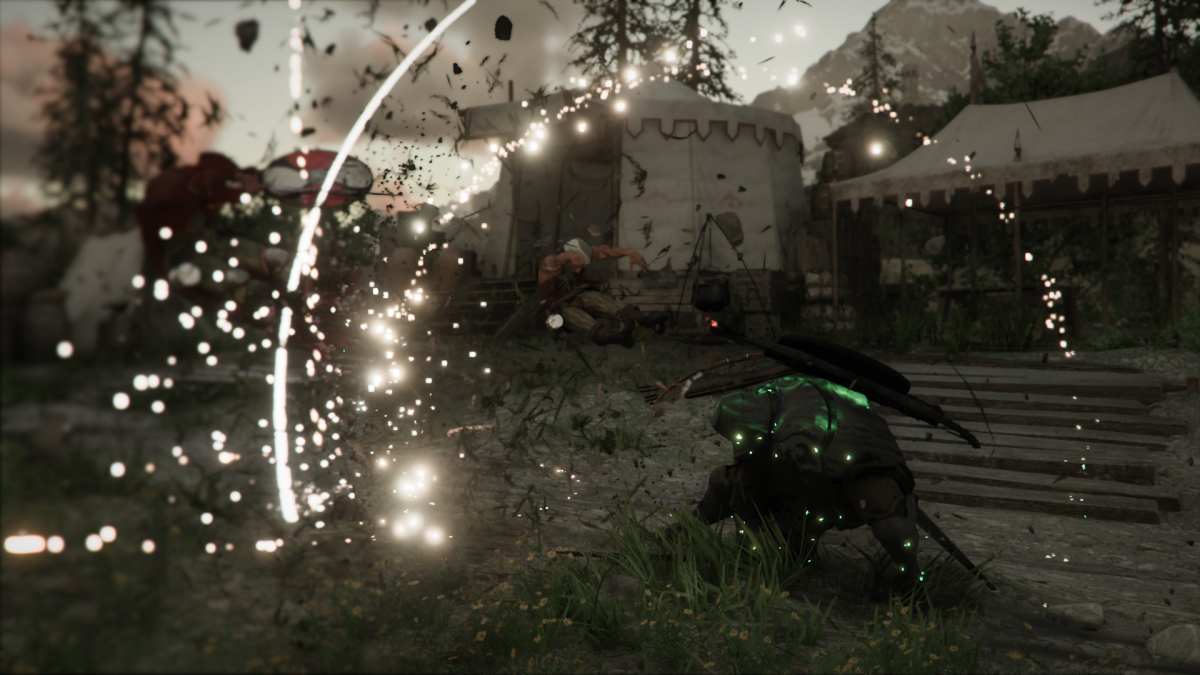

Decimated and left to rot, it’s time to come back to where it all began — Raccoon City and the long buried secrets of the Umbrella Corporation.
Resident Evil (RE) Requiem, also known as RE9, was released on Feb. 27 to eager fans and just one month shy of the RE series’ 30th year anniversary. True to form with many of the RE games, this game adheres to a male-female dual protagonist formula with about eight hours of gameplay allotted to both.
Requiem follows Grace Ashcroft, the FBI analyst daughter to Resident Evil Outbreak’s Alyssa Ashcroft, as our newbie protagonist and the well-loved agent Leon Kennedy as our seasoned protagonist.
Following the deaths of multiple Raccoon City survivors, Grace is tasked to investigate the most recent death within Wrenwood Hotel. The only qualm is that her mother passed in the same hotel eight years prior. When Grace investigates the hotel, she discovers that someone has been stalking her. With that, she gets abducted by ex-Umbrella scientist Victor Gideon and is forced to find her way out of the grasp of her captor. Meanwhile, Leon decides to do his own investigation into the survivor deaths and gets caught up in the subsequent scheme of Victor’s.
While I myself am a newcomer to the series, I played alongside my older sister and her partner. She has been a fan of the series since the early 2000s and her partner became a fan after the RE2 remake.
Since I’m just jumping into Resident Evil, I unfortunately could not understand all the nuances within the story presented. For what it’s worth, the pacing felt very natural and there weren’t any parts that felt boring. Towards the later part of Leon’s sections, it felt a bit slow and a slight focus-bias surrounding him.
I found myself relating to Grace’s story as watching her inexperience and fear morphing into confidence and hope felt satisfying. While I couldn’t relate to Leon as much, his deterioration over the games made for a genuine worry for how his story will end. The return to Raccoon City felt like a stroll through memory lane for my playing companions, although the lack of mentions of certain iconic legacy characters was a little disappointing to them.
In terms of gameplay, Requiem is unique in that it caters to both new and old fans alike. If one was feeling nostalgic for the older gameplay, there is an option to set the gamemode into Standard (Classic) which is true to the older games of the series, aside from tank controls. Since we were more used to the gameplay of the recent installments, our gamemode was set to Standard (Modern) which still offered a fair amount of difficulty.
Resource management is the name of the game, as with all RE games. Whether a player chooses Classic or Modern, the number of resources given like scrap, bullets and healing items can leave one pinched in a tough situation. This becomes more apparent in Classic even more so than Modern, as it’s back to ink ribbons to save and a more limited number of ammo to shoot if so desired. When it came down to it, one or two bullets could be the difference between completing an objective or being sent back to the typewriter.
Requiem was a lot more forgiving in terms of that management. While the resources we collected certainly weren’t plentiful, exploring multiple times around the map to complete side rooms was worth the hassle for the extra material. One thing to note is that any resources left by one protagonist can be picked up by the other if they explore the same area. The same goes for any enemies that were left behind for the other to deal with as shooting doesn’t permanently eliminate the infected enemies.
Requiem is also unique in the sense with markers on the map to indicate whether a resource has been collected or not, such as green herbs or blood samples. Doors also had the same function determining whether a room had been accessed or locked, sometimes having indications on what is needed to unlock it.
Despite the more forward approach with the markers, the game didn’t feel very hand-hold-y. There were times towards the end of a section where we’d end up getting lost on where to go or what was needed to complete an objective. The game encourages the player to thoroughly look through collected information or the environment in order to find where you need to go next. If one was completely lost, there was a hint system. Although, we never felt compelled to use it.
Oddly enough on console, the enemy’s noises wouldn’t fade as much when traveling up stairs or when moving away from them. It made it difficult sometimes to figure out where they were in relation to the player without knowing their patrol area.
One thing that more seasoned players are able to notice is the lack of mandatory puzzles. Leon’s sections severely lacked puzzles and the player mostly resorted to tools to break into places. While that can be an interesting characteristic of his older personality, it didn’t hit that way for us. The gameplay felt more akin to a scavenger hunt for keys rather than one large puzzle to solve, which made the reward of opening an area unsatisfying.
What the game lacked in puzzle mechanics, it made up for in strategy. Requiem gives the player the ability to experience the game in either first-person or third-person for both Grace and Leon. Starting with Grace, we decided to play in first-person as the game recommends.
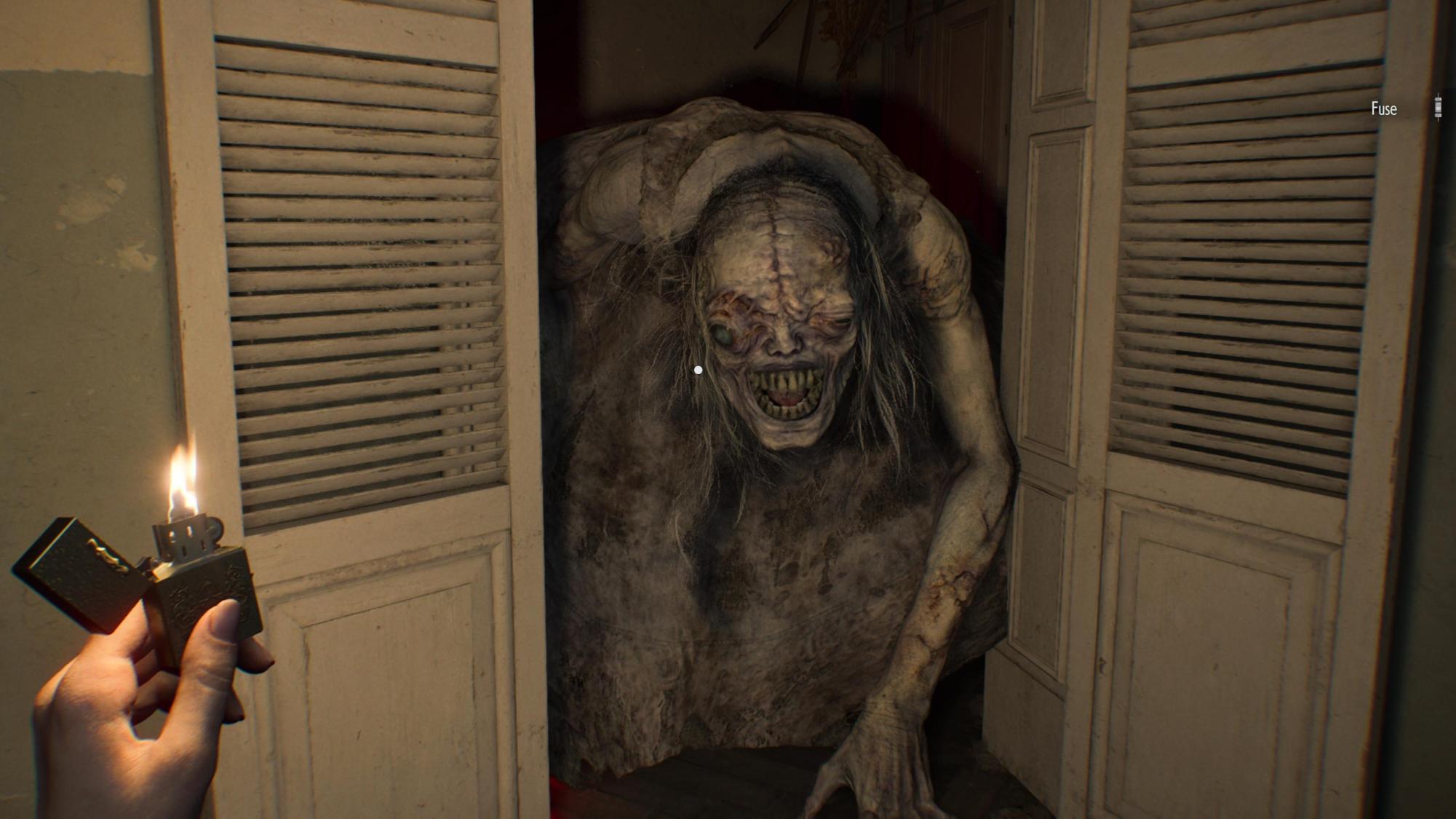
If I had to give praise to anyone in the game, I’d give it to the actress and gameplay designers of Grace as her sections were absolutely terrifying. Being in first-person, you essentially become her. Grace’s anxious breathing and screams can be heard throughout the game and she shakes whenever she aims her gun. Her running speed is not much faster than her walk, so fleeing from enemies felt excruciating.
Due to her design, stealth became a huge part of Grace’s game loop. Peeking around corners, keeping watch for enemies patrolling around and throwing things to distract was a lot more fun than expected. It filled some of the gap that the puzzle mechanics left empty. The design of the rooms also made it so that you snuck around enemy areas by going through more unconventional paths.
As for Leon, we decided to play in third-person as the game recommends. Despite being 51, he still has the same campy one liners and side swept hair as always. In contrast to Grace, his sections were mainly combative. Leon moves slower than in previous RE games, but he carries an arsenal of weapons at his disposal. Enemies tended to come in waves and about half of them had weapons of their own.
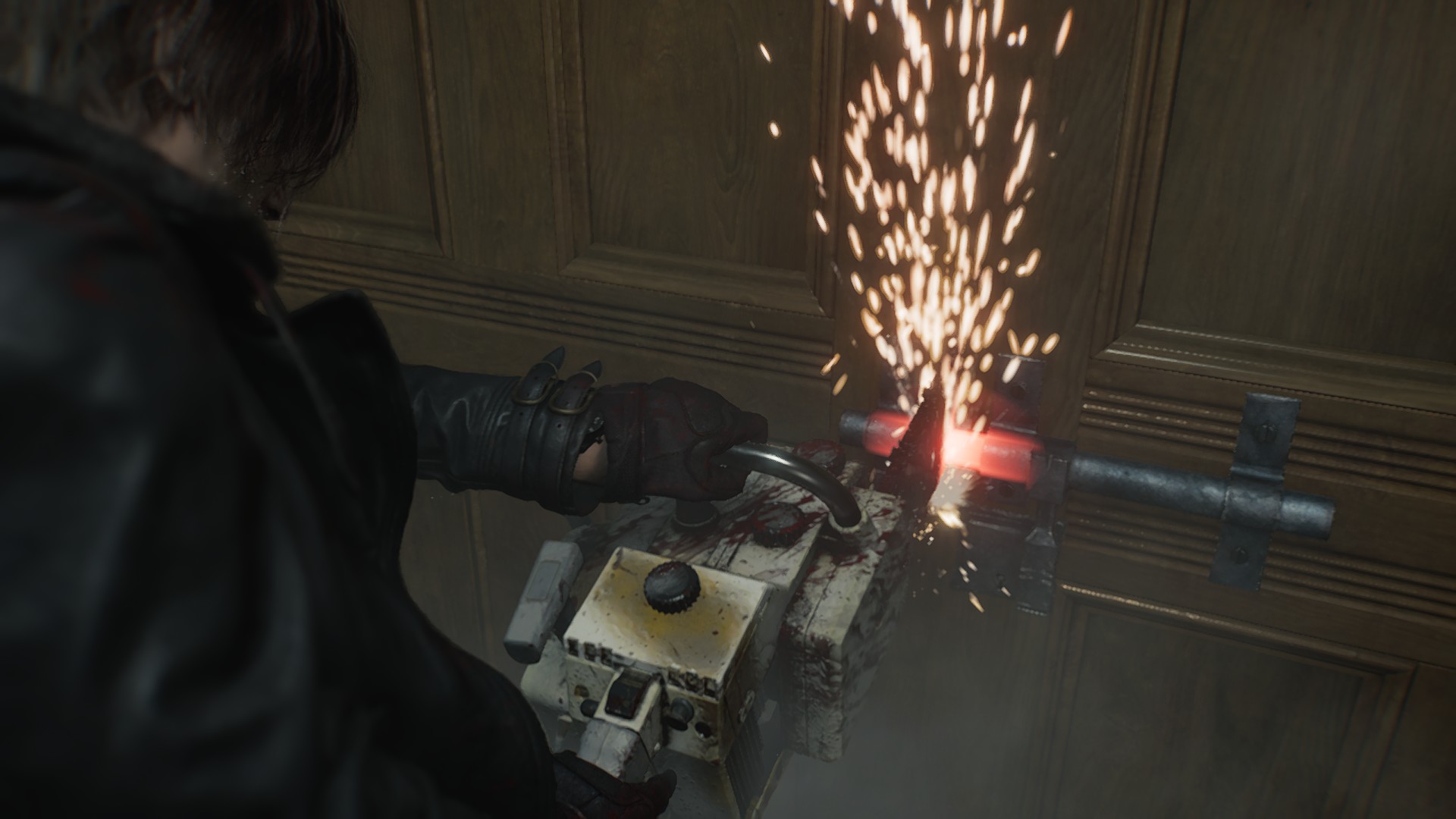
One new mechanic is the ability to temporarily wield any weapons an enemy dropped, whether it be as simple as a spear or as ridiculous as a chainsaw. That being said, enemies with a free hand could pick up those weapons as well, so good luck if they man an RPG instead of you.
The one major gripe we had with combat was the propensity to accidentally heal instead of opening the inventory and crafting, or hitting enemies with injectors instead of melee attacks. In a pinch it’s helpful, but a lot of the time it was annoying to accidentally waste an injector.
There isn’t much deviation in the gameplay loop after a while. It was mostly just shooting and parrying with your hatchet, but it was a fun breather between sections of horror.
In a sense, Requiem is a love letter to RE’s fans both new and old. According to a post made on X by the official RE account, the game sold over five million copies across all platforms within the first five days. If you’re on the fence with the series, there’s something in it for all people to enjoy.
While the game felt a bit simpler than previous iterations and a tad lacking in the challenge department, Requiem oozes a campy charm that makes the game feel true to the roots of its legacy. It’s telling that despite me and my playing companions vast range of experience, we all had a great time trading the controller back and forth with terror.