

The last decade exposed young Americans to gambling in a multitude of ways. Some of which may have gone unnoticed or have seemed innocuous — all priming them for the world of gambling today.
For some, it was the video game Counter-Strike: Global Offensive (CS:GO). Players spent real money in hopes of winning high-value or exclusive skins for their character. (This writer’s son, when he was 11, spent $3,000 in one month on them.) Another way people have been exposed to gambling is the endless offering of blind boxes for collectible merchandise.
There is huge money to be made. Most brands can sell three times more of a product in a blind box than without.
According to a report in Marketing Brew last August, Pop Mart, the brand behind Labubu dolls and other blind-box brands, made $1.93 billion in the first half of this year alone. The frenzy over these dolls has been fueled by Tik Tok unboxing videos, influencer pushes and the simple “small cost, big reward” calculation people make that eases the way for an initial purchase. The average customer buys multiple boxes in hopes of getting the one they want, only to find they’re unlikely to ever get it.
Although both CS:GO and blind-boxes impact children, the gambling on Roblox is even more concerning because it directly involves them. Roblox is a platform of games and social interaction that on its earnings calls touts 380 million active users, a significant amount of which are children. Many games on Roblox, such as Adopt Me!, Blox Fruits, and Pet Simulator 99, push kids to spend real money on chance-based rewards. The children often don’t understand that they are spending real money.
Roblox is free-to-play, but the company generated a whopping $3.6 billion in revenue for 2024 from in-game micro-transactions through purchases of its virtual currency, Robux.
All this activity taps into this concept of randomizing rewards — which can be more addictive than if you just always win. It keeps you believing you are going to win something, but you don’t know when, and you don’t know what you will win. The unpredictability of these rewards is a key part of the puzzle. Because companies can reap significant financial benefits it takes effort to get through a day without being exposed to an ad, post, influencer or store pushing you to gamble.
The current state of online sports betting has taken this all to a new level and created a clear and easy frictionless path to gambling. In May 2018, a Supreme Court ruling struck down the 1992 Professional and Amateur Sports Protection Act (PASPA), which barred sports betting in most states.
Since then, 30 states have online sports betting via smartphone apps or websites. “Washington has legalized sports betting on reservation lands of federally recognized Native American tribes. It is available in both retail and online formats, the majority of sports betting taking place in the state is occurring in person,” according to the Legal Sports Report. It is important to note that straight online sports betting outside of casino land is still banned in Washington. Those wanting to place a sports bet, must enter a reservation to bet with casinos partnering with sports betting apps.
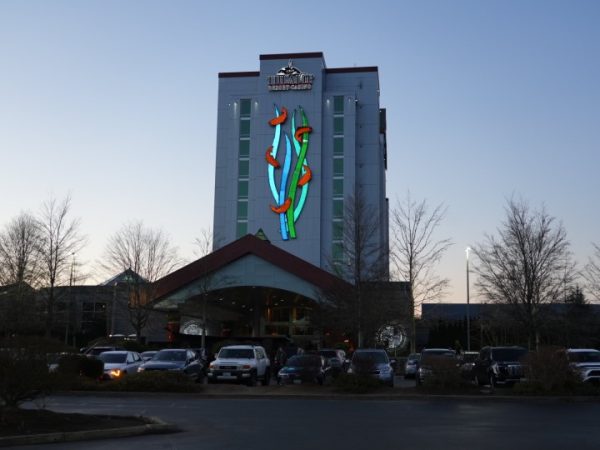
The Tulalip Resort Casino has a deal with DraftKings Sportsbook.
If you’re thinking, “That’s not so bad, you have to go to the casino to place these bets, it’s not that easy.” Well, think again.

Enter Kalshi, an easy-to-use app you only have to be 18 years old to use, instead of 21. When it launched in July 2021, it marketed itself as a prediction market: a company that trades in futures and facilitates the trading of legitimate financial products.
In January 2025, Kalshi added sports betting to its repertoire of offerings; ranging from wagering on the weather, Gaza bombings, words spoken in a political speech, the Oscars and Time’s Person of the Year cover, to name a few. Because it claims to be trading in futures, it’s managed and regulated by the CFTC (Commodity Futures Trading Commission) and essentially can ignore all current state gambling bans and laws.
Though Kalshi has faced multiple lawsuits and the Biden administration’s efforts to manage it for what it is — a gambling site — it has continued doing business and grown to a $5 billion valuation. To further buttress from government scrutiny, it employed Donald Trump Jr. as an advisor. All challenges from the CFTC have been dropped during the current Trump administration.
Kalshi has sued and has pending lawsuits attempting to curtail state governments from regulating it, while states have filed lawsuits claiming that Kalshi essentially ignores their gambling bans. One legitimate way Kalshi is different from a sports book is that you are not betting against them, you are betting against other players and Kalshi takes a fee of the winnings. In the short time since Kalshi added sports betting, it has become a significant part of its business.
Yahoo finance and other reports claim that up to 90% of Kalshi’s fee revenue comes from sports betting.
So how does sports betting work? Most is done through an easy-to-use app. The majority of betting apps offer incentives to sign up, credits to gamble. They give instant money to bet when first installed and offers for bets they know a first-time user will win, in hopes that will lock them in as repeat gamblers chasing that initial rush of the win. The app links to your credit card or bank account, and the funds just move around as you win or lose. It feels more like you are playing a game than losing real money.
As far as the types of bets, there are traditional bets on who will or won’t win, or the spread of the win. There are also “prop bets.” These bets are side bets on small events in a game like the first pitch of a game will be a ball, or the color of the Gatorade Shower at the Super Bowl.
Even more popular is the parlay, better known as the “sucker bet”, which is a bet that multiple micro events will happen in a game. These bets are called “combos” on the Kalshi app in order to avoid gambling scrutiny. Parlay bets are fun and exciting for players and they have huge rewards if they hit. However, the reality is that they are losing bets. Estimates claim over 70% of these bets lose simply because all the events must hit for someone to win, but players love parlays and the apps continue pushing them.
Sports betting has other negative impacts and is calling the integrity of the game into question. The popularity of “prop” and parlay bets have had a negative effect on player’s mental health, especially college athletes. Players are receiving death threats and are subjected to abuse when their performance does not support fans’ bets. Adding to that is the temptation players might have to bet on or help others win “prop” or parlay bets by directly impacting their performance.
This past November, “Cleveland Guardian pitchers Emmanuel Clase and Luis Ortiz were charged with fraud, conspiracy and bribery stemming from an alleged scheme to rig individual pitches that led to gamblers winning hundreds of thousands of dollars,” according to an ESPN report and unsealed indictment records. Both pitchers could face up to 20 years in prison and have been banned from the MLB. These are just recent events in a growing list of gambling related scandals.
So, who is doing all this betting? Online sports betting appeals to a broad demographic, Pew Research Center published a recent study where 22% of the population said they had placed a sports bet in 2025.
Those most engaged in sports betting are men in their 20s. Lucien Sevilla, 22, a former EvCC student and past editor at The Clipper, is a casual bettor. But he does have friends he worries have developed concerning gambling behaviors in a very short time.
Sevilla bets because he likes the validation on his guesses, challenging himself to win. “It’s also fun and makes the game more exciting.” He bets primarily on Fan Duel when he can get to the casino or on Kalshi when he can’t.
Sevilla struggled to give a clear answer when discussing if he wins more than he loses, or how much he has won or lost. He was not being evasive, he really didn’t know.

The app doesn’t serve up any running totals of wins or losses and by design, makes it really hard to know what you’ve spent. He said he thinks he can get to the number by adding up his “slips” but he has never done it. He just monitors how much he has in the account and how quickly it’s draining.
Sevilla sets a budget and tries to stick to it.
He generally bets that his favorite team will win but he also places bets, such as if an NBA announcer won’t say “Jordan” while covering a game and during the Ravens versus Steelers game, if the announcer would say the word “standings.”
He knows parlays are bad, however he still bets on them. “They are just fun. And a low cost of entry. So, if I lose, it’s not a lot.” Sevilla said he believes opening sports betting like this, “Was a mistake, they never should have done it. And I think it is detrimental to the integrity of overall sports.”
Another area of apprehension around these sports betting apps is the ease and speed in which they make it for you to bet. These apps are intuitive and frictionless.
In seconds, you can place multiple bets as they send notifications during a game to place more bets, with little time to think about the bet, tapping into FOMO. They have all your data so they know what types of offers or messages will lure you back in if you are trying to take a break. They know when you are most susceptible to influence throughout the day and night, and they make use of all that info to keep you betting.
Multiple studies have been done on the impact of sports betting. Investopedia claimed, “Bankruptcies surged and credit scores dropped in states where sports betting was legalized” and found young men were devoting hours to gambling each day at the expense of work and education.”
Stat10, an organization reporting on medical frontiers and trends, concluded “The consequences extend beyond lost money. Hazardous gambling is correlated with increased rates of anxiety and depression, and young men who engage in it are more likely to slide into a full-blown gambling addiction. Boys who frequently gamble miss more classes, perform worse in school, drink more alcohol, and participate in other risky behaviors at higher rates, often to cope with gambling-related stress. These antisocial patterns compound, with gambling sucking up time and mental energy that might otherwise go toward relationships, hobbies, and personal growth.”
Sports betting for the foreseeable future is here to stay, power has been consolidated and there is great support within the current presidential administration. Companies have endless dollars to throw at legislation, lawyers, influencers and marketing. They are peddling the American dream in a time when young people feel the system is rigged, that their options are limited, that AI will take their jobs and that they will never own a home.
For some, gambling seems like a way to game the system, but these wildly successful companies are not making all that money on the backs of winners. In fact, Kalshi doesn’t care who wins or loses, it makes its money on collecting fees, so it only cares about getting more and more people betting.
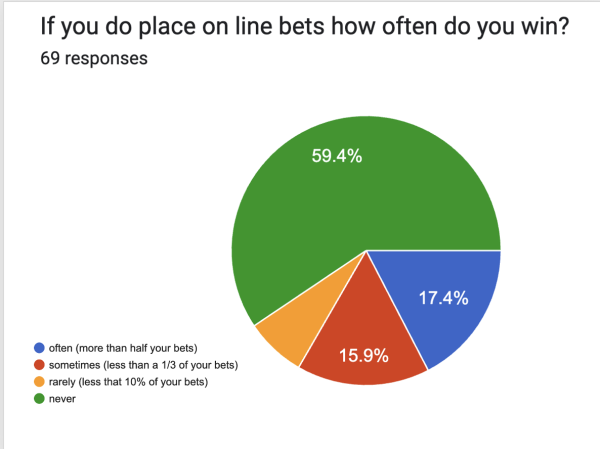
The results found in a survey of EvCC students produced by The Clipper shed some light on how college students are experiencing gambling. It found that 73% of respondents were aware of on-line betting and 26% have placed a bet at some point. When asked how often they win, 59% answered “Never” and 17% said they win “Often.” Over 62% said they know someone they think gambles too much. Most surprisingly over half of respondents said they gamble for fun or to make the game more exciting, not because they need the money.
It is designed to separate you from your income, most gamblers will manage through it okay, some will make a bit of money and some will get in so deep they don’t see a way out. We are starting to see reports of “sharps” and influencers claiming to be making significant amounts of money on these apps and some of this may be true, but it is still a rare occurrence.
For those feeling like they are in too deep, like they can’t get a handle on it, there are resources to help anyone struggling with gambling.
The National Council on Problem Gambling offers help and a quiz you can take to help you self assess your risk. You can also reach out to the Washington State Problem Gambling (ECPG) Helpline at 1-800-547-6133. The Helpline is always open and Gamblers Anonymous offers help, a 12-step program including a weekly meeting in Everett.