High school is often hailed as the last required step before adulthood.
After graduation, we’re expected to find jobs, manage money, make smart choices and figure out what comes next. Some go to college. Some start working. Others choose trade school or apprenticeships.
No matter the path, graduation often marks a significant shift toward greater independence. It could mean helping support their family members or adjusting to living on their own. The transition into adulthood looks different for everyone, depending on personal circumstances, access to resources and prior experiences.
This raises a larger question: Are Washington high schools preparing students for life after graduation?
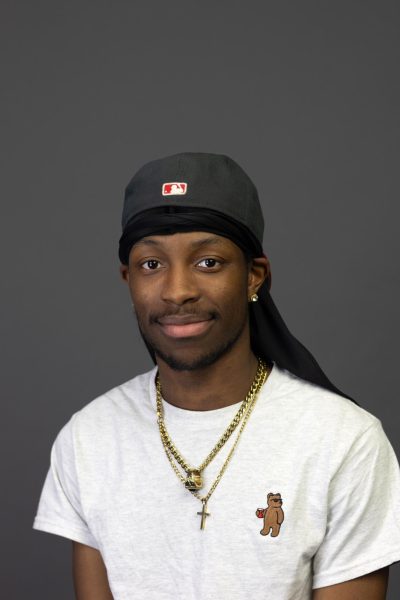
 Jaime Bombach, now a student at EvCC, said high school didn’t fully prepare him for adulthood.
“I feel like a lot of classes in high school are just remembering information and then testing you on what you remember,” Bombach said. “They don’t really prepare you for aspects of everyday life.”
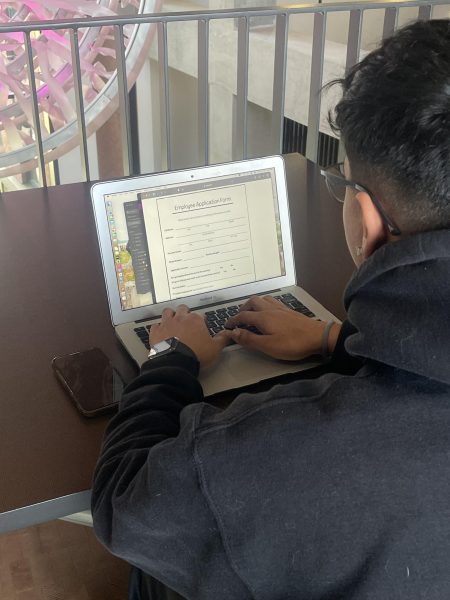
Bombach said he never had a class that taught him how to apply for jobs or get ready for interviews.
“I didn’t know what taxes were, what to write on job applications, where to get that experience,” he said.
Bombach also felt like high school pushed college as the ultimate goal, but he has an idea that could benefit others.
“Everything in high school is ‘do this so it looks good on your college application,’” he said. “So many kids don’t even want to go to college anymore. More classes should focus on how to advance yourself in your career past high school, but not necessarily going to college.”
Other students had a different experience. Carlos Zendejas-Barajas said his high school gave him a lot of support, especially with college applications.
“If you needed help with essays or just applications in general, anything related to college, they would help you,” he said.
He added that applying for school was confusing at times, but he felt ready by the time he graduated. Still, Zendejas-Barajas believes high schools should highlight more options besides four-year colleges.
“When I graduated, I had already figured out everything. They should help out with anything you decide to do,” he said, mentioning trades, apprenticeships and going straight to work.
Zendejas-Barajas said that his school brought in people from different career fields, showing their efforts to introduce possible jobs and the path to get there.
“We’ve had police officers come into the school to talk about that career field or we had dental hygienists to get people interested or know more about what they’re going to go into,” he said.
The biggest issue wasn’t about school; it was trying to meet new people after high school.
“I was online and just graduated high school, when I came into this quarter, I knew no one. The biggest challenge for me was meeting new people.”
Zendejas-Barajas suggests that high school should teach students how to be more interactive and social. He adds that all his friends from high school go to different colleges, and it’s a struggle to make new friends.
“I feel like they should tell you what it’s gonna be like at first,” he said. “I got to meet new people, and that’s harder because I’m only here two days a week.”
Delon Lewis, a former Running Start student, said that the program helped him prepare for college-level work, but some real topics were still missing.
“There are a lot of things they don’t teach you about in high school, like how to budget, credit score and interest rates,” Lewis said.
Lewis said picking a career path felt stressful and confusing at first, but learning to make decisions on his own helped him grow and envision his future.
“There were so many options. I wasn’t sure what I wanted to do. I ended up changing majors like two or three times,” he said. “When you’re a kid in high school, your parents pretty much set the tone for whatever you’re doing. Living on your own, there’s a lot you can learn.”
Lewis also believes there are other ways to get an education and offers solutions to the problem. He suggested that schools should provide students with more information about trade careers and community colleges.
“A lot of students in high school don’t really want to go to college, he said. “But there are a lot more trade schools they could go to. Bring people to our school, make more field trips out to colleges, or see different companies and how they work.”
Reflecting on his personal experience, Lewis emphasized the importance of patience and gradual growth, offering advice for navigating life without feeling overwhelmed.
“Just trust the process and the journey in forms, just gotta take it one day at a time. That’s what I learned,” he said. “That’s how you avoid being stressed out too, because if you’re always thinking about the future, you can’t necessarily do anything about it, but you could change your life day by day by building different types of habits.”
However, Sarah Pewitt, a High School and Beyond teacher in Everett Public Schools, said the district works to guide students starting as early as middle school.
“I think we try to provide opportunities, give them a lot of information and the ability to get some help to plan for the future and kind of see what comes next,” Pewitt said.
She said students don’t need to have their entire life planned out by graduation.
“It doesn’t have to be all figured out by the time you leave, but you just need to have a next step,” she said. “Life will just take you places when you start having different experiences.”
According to Pewitt, Everett Public Schools requires students to take a planning course before they graduate.
“We’re the only district in the entire state that has an actual course; everybody else doesn’t. There is a portion of investing, giving, spending, budgeting, resume, mock interview and all of those kinds of things,” Pewitt said. “The intent is there.”
She said the district promotes all paths, not just four-year colleges.
“If it’s a four-year college, go for it. Whatever it is, that’s the goal,” she said. “Find your path and figure out a way to get there.”
Pewitt also said students in the Everett Public School district receive lessons throughout the years to help them explore their interests and think about future careers. Still, she understands that not every student feels prepared.
“I really wish there was more emphasis on that planning for the next step,” she said.
She added that financial literacy may soon become a required class statewide. While money lessons are currently taught at different grade levels, she believes a dedicated class would be helpful.
“What we’re hearing on the horizon is that financial literacy will be added as one of those requirements officially in the law,” Pewitt said. “I think an actual class on it would be fantastic because that’s what I’m hearing students really want.”
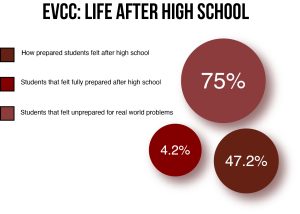
To better understand how prepared students feel after graduation, a survey produced by The Clipper was conducted with students currently enrolled at EvCC. The response revealed that many students feel the same gaps that Bombach, Zendejas-Barajas and Lewis talked about: while academics may build knowledge, they don’t always teach the skills needed in everyday life of adulthood.
Some things that stand out were that 75% or more of the students who took the survey felt like high school didn’t prepare them well for managing finances, living independently and real-world responsibilities.
This isn’t a small issue; it shows that most students feel unready in those areas. Many students graduate knowing how to pass tests or complete assignments, but they don’t feel confident surviving on their own without the need for assistance.
High school gives students the foundation of knowledge, but many students still feel unprepared for real-world challenges beyond college. Some schools offer planning courses and career guidance, but there are still inadequacies in certain areas.
True preparation is more than just academics. It is about equipping students with the skills and confidence to navigate life after graduation.