Less than 10 minutes away from EvCC, the “Wondrous Watersheds” surfaced at Imagine Children’s Museum on Nov. 8
A day full of fun, family-friendly activities about Washington’s watersheds and the importance of its wildlife, families came at 10 a.m. to enjoy hands-on, engaging activities every half hour until 2 p.m. Three floors filled with different exhibits and areas for children to play in. Each held an exhibit, packed with eager youths and their parents, ready to learn while wearing a salmon crown on their heads.
“We’ve partnered with the children’s museum just to have a few activities and tables that focus on how salmon survive,” Nathan Sharon said, the youth education manager at Snohomish Conservation District.
Salmon are one of the local icons of Washington state and its culture. Many people may not realize that they are on the verge of extinction because of littering and the trash contaminating the water. Through this event, the Snohomish Conservation District aimed to raise awareness of how what people do affects the environment.
“How we interact with water and how a lot of human activities end up causing pollution, and then what we can do to mitigate that and especially little kids, just getting them to understand that they can make a difference in their environments.”
The 11 a.m. activity had participants listen to the “What’s in a Stream?” presented by the City of Everett Stormwater Scientists, displaying an array of different liquids people see in their everyday lives and explaining the PH level of each.
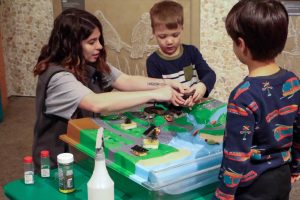
Children peered over the table as they watched a demonstration of the PH measuring tool being inserted into a container of liquid. They curiously latched their eyes onto the container by using a magnifying glass.
Each station held informational pamphlets and posters, encouraging anyone stopping by to take them home. “How to be a Salmon Friendly Gardener” was amongst the pile and another poster focused on Orca Recovery Day.
Orcas and salmon are vital to Washington’s waters. They share an important relationship where orcas thrive on hunting salmon. By matching the pictures to the action for orcas on the poster at one station, children learned that they can make a difference in helping local orca populations.
If lively demonstrations were not a child’s preference, there were several activities available for children who enjoy relaxing, learning opportunities. On the second floor, plant pot decorating brought in families to plant their own seeds and customize it to their liking.
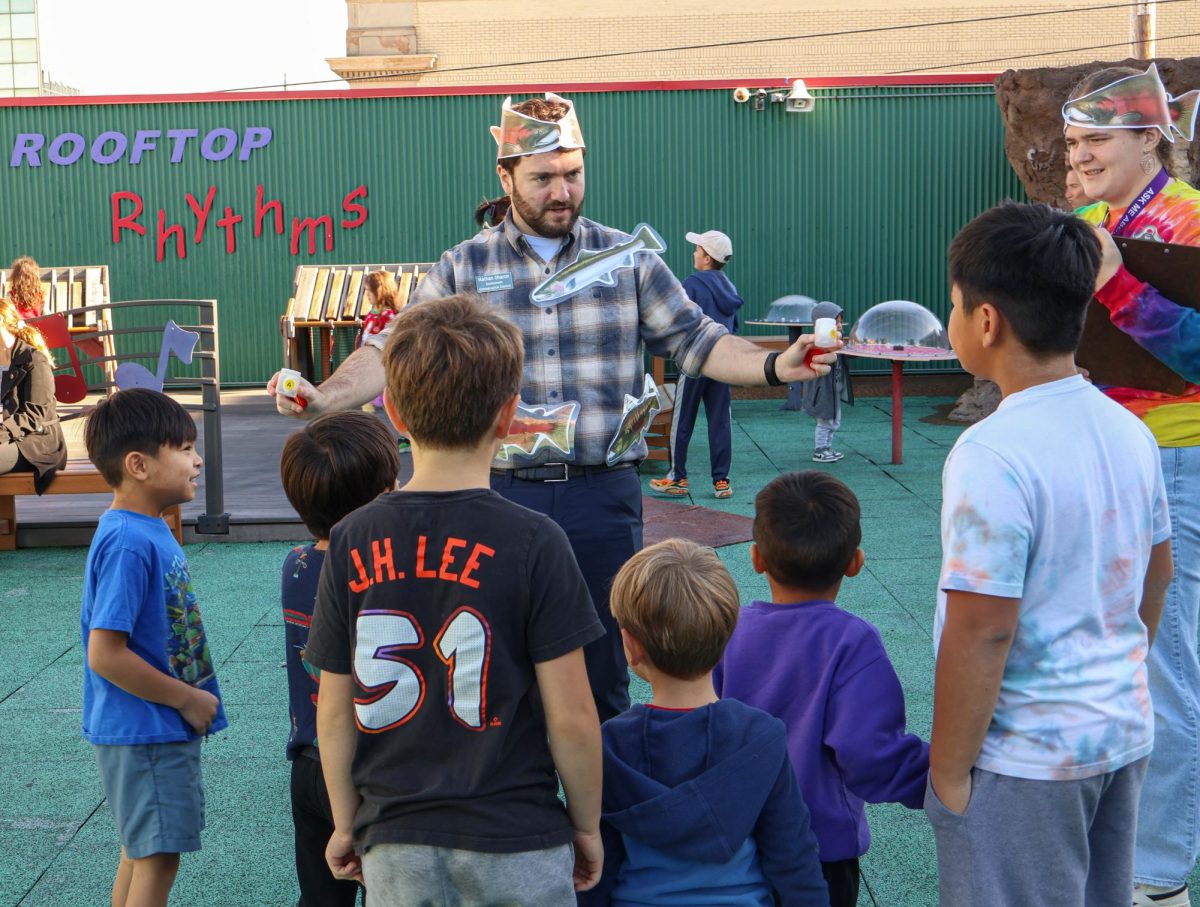
The 11:30 a.m. activity occurred on the third floor of the museum, where the rooftop playground is located. The playground was bustling with parents and children playing around, all waiting for the next presentation to start. The volunteers came in with a couple of things in tow — three labeled containers with a ball inside and wearing their salmon crowns.
Sharon, who came in with multiple pictures of salmon haphazardly stuck to his body, eagerly gathered interested children passing by. Everyone sniffed the containers and the ball inside, which contained the smell of the salmon’s “home river” scent. With that scent in mind, Sharon instructed them to search the playground for that smell and the children ran off to find that particular smell. Like real salmon, salmon rely on their sense of smell to swim back to their home stream.
Once the children had stuck their heads beneath the slides and searched for their home river scent, they all rushed back to identify which of the containers was the correct one.
By noon, the activity moved to the first floor. In a cozy lodge area, a small, vibrant play space was set up for any interested parties. A little environment of rivers and terrain was set up, along with houses, cars and little toy fish in the rivers. “Explore the Enviroscape” captured the attention of younger children to encourage further learning about their surroundings.
Thirty minutes later, the volunteers gathered for the “Litter Quest Pick-Up” activity. Young participants used a claw tool to pick up items. As a lesson in respecting your environment, children were taught to pick up the trash being left behind.
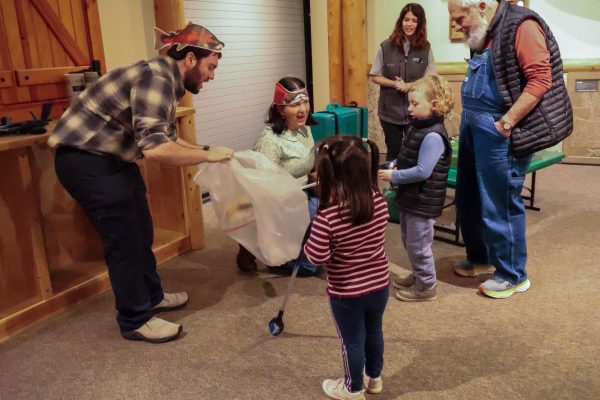
With smiles on their faces, they quickly ran after the “litter lady” excitedly and learned to keep their surroundings clean. Families watched their young children with happy expressions as they remained engaged in the activity.
“The hope is that through this event, when people see salmon or when they see a stream or a habitat that might support them, they think twice and if they see that trash, they pick it up,” Sharon said. “If they’re spilling their drinks, they move further back from the creek just to keep it on their mind.”
The Snohomish Conservation District and City of Everett strive to create hands-on experiences and storytelling about the science of water in a fun, interesting way for anyone of any age to enjoy. Families searching for an idea to do over the day can look at the Imagine Children’s Museum’s website to see their schedule of upcoming events to attend.
For any families who are interested in free family fun, the Imagine Children’s Museum hosts Community Access Night every month. Community Access Night allows families with children ages 12 and under to attend events for free from 3-7 p.m. on every third Thursday of the month.